Showing posts with label Judgementalism. Show all posts

Sunday, January 26, 2020

Appearances

It appears to Zacchaeus and to us that he is searching strenuously to see Jesus. The crowd gets in his way so he runs on ahead and climbs up a tree so that he will be able to see him. He’s doing some real work to accomplish this goal. But, in the end, Jesus tells us that it is he who is searching for Zacchaeus. “For the Son of Man came to seek and to save the lost,” he says. Zacchaeus seeks to see Jesus, but at the time and more importantly Jesus seeks to save Zacchaeus.
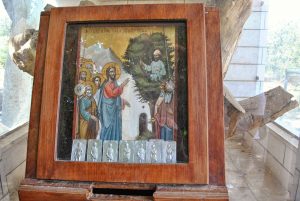
Orthodox icon showing Zacchaeus in the sycamore,
behind, the tree is believed to be the ancient sycamore of Zacchaeus.
Greek Orthodox Monastery of the Prophet Elisha,
Jericho, Palestine.
While we are looking for the Lord in our lives, it is good to remember that he is the one looking for us. He has been looking for us ever since we hid from him in the garden because of our shame over our sin. Then he went looking for Adam and called out to him, “Where are you?” (Gen 3:9). He is calling out to us still today – searching for us among the trees.
Some of us, like Zacchaeus, are looking for the Lord, but some of us, like Adam, are hiding from him. Some of us are climbing our trees to get a better look while some of us are hiding among the trees (Gen 3:8).
The Venerable Bede connects the tree Zacchaeus climbs to that of the Cross. Some of us embrace that cross while some of us shun it.
But notice that whether we make ourselves conspicuous like Zacchaeus or hide like Adam, one thing remains the same: The Lord finds us. He finds Adam who is hiding as easily as he finds Zacchaeus in the tree. The Lord is seeking for us and the Lord is the one who finds what he’s looking for. He comes to seek and save the lost and we can count on him to accomplish his purposes. Still, it will be better for us if, when he finds us, he finds us also searching for him. Things went better for Zacchaeus that day than they did for Adam, as you might recall.
While we’re working to find the Lord in our lives, it can seem to us that we’re all alone – that he isn’t with us, or searching for us, but that we’ve been abandoned. Even Jesus, who is God, knows what it is to feel forsaken by God as he hangs upon a tree seeking the will of his Father. So, if we, like Zacchaeus, are looking for the Lord, have embraced our cross, and climbed our tree and now we feel forsaken and that it was all for naught (there is no darker or more painful feeling) we may rely on the hope that the Lord has gone even into that desolation and is there with us in it. He is with us even when it doesn’t feel like it – and not only passively, but is actively seeking us with an infinitely greater fervor than that with which we seek him. The truth of it is not how it appears to us, but is how the Lord knows it to be.
It appears to the crowd and us that Zacchaeus is a great sinner. And maybe he is. The tax collectors of that time and place grew rich by taking more than was owed. By dishonesty. Zacchaeus was both a chief tax collector and rich. So you do the math I guess.
Still, who is the judge of other men’s sins? The crowd murmurs about the sins of Zacchaeus when the Lord goes to stay with him. Did they forget their own sins while the Lord was walking among them? Were they not in awe that he would stoop to associate with them in their sins? Do we forget our own sins when other’s sins come to light? “Lord, help me to remember my own sins, and not judge my brother and sister.”
In any case, our judgments are worthless. We do not see things as they really are. We see only appearances. It appears to us that we and Zacchaeus are searching for the Lord, when really it is the Lord who is searching for us. It appears to us that Zacchaeus and others are great sinners, while our own sins are paltry. But the truth is that Zacchaeus is penitent while the crowd (and maybe some of us) are oblivious to our own need to repent. Meanwhile impenitence, as long as it lasts, it is the unforgivable sin. If our impenitence were to last forever, so would our estrangement from the God we claim to seek.
Listen to Zacchaeus: “Behold, Lord, half my goods I give to the poor; and if I have defrauded any one of anything, I restore it fourfold.” He repents and makes restitution. One of the fathers calculates that after Zacchaeus gives away half his goods and then restores any dishonestly acquired wealth fourfold, he’ll be left with nothing. He’ll have given everything to the poor.
Contrast him to another rich man – the rich ruler who kept all the commandments, but was unwilling to give his wealth to the poor and follow Jesus (Luke 18:18-25). That man seemed to all to be a godly man, but he was unwilling to grow any further toward the perfect and eternal life Jesus is calling us to.
We do not see things as they really are. Jesus does. Jesus proclaims salvation to Zacchaeus, whom the crowd thought a sinner. And Jesus laments how difficult it will be for the other rich man to enter the kingdom, though the crowd thought him a saint. Remember, when Jesus observes how hard it would be for him to be saved, those who hear it ask, “Then who can be saved?” (18:26). In their judgement, if the rich man who kept the commandments cannot be saved, then no one can.
Our judgments are worthless. It is the Lord who sees things as they really are. So let us not trust in appearances, but trust rather in the Lord. Let us repent of our own sins rather than judging others. Let us trust the Lord to find us, even when we are lost.

Sunday, July 21, 2019

Jesus knows the hearts of others and we do not.

Jesus knew what the scribes were thinking (Matt 9:4). He knows what we're thinking too. He knows everything. There are no absences in the omniscience of God.

This is not true of any of his creatures – not even the angels, fallen or unfallen. We humans are of massively less intelligence than the angels. Pseudo-Dionysius says that "the intellectual power of the angel shines forth with the clear simplicity of divine concepts."[i] Their minds are close to God. Meanwhile, we tend to muddy things up.

Still, there are things even angels do not know. There is nothing that God does not know. All knowledge, in fact, comes from God. If you know a thing (and that's as opposed to thinking that you know a thing), it is because God has given it to you to know. If God did not give the gift of knowledge, you do not know what you think you know. You merely believe it. And mere belief is not knowledge.

Everybody has an opinion. But not everybody has knowledge. The reason angels and men do not know everything is because God has not given us everything to know.

One of the things he does not give us, usually, is the knowledge of one another's thoughts. People sometimes fall into the trap of thinking that they know what other people are thinking. And this so often leads to judgmentalism. How commonly we fail to give the benefit of the doubt. How commonly we fail to admit our own ignorance to ourselves. We do not know what other people are thinking. We cannot judge them. We do not know their hearts or intentions. But God does.

We should try to remember that we are not Jesus when we are tempted to believe our own suspicions about other people. Let’s become guileless. Let’s stop thinking we know what we do not know. Let’s become unassuming. Or, if we must assume, let’s assume the best possible intentions on the part of others.

I do not say that we should not judge good from evil. I do not say that we should not judge actions. We can, we should, and we must. Paul exhorts us today: “hate what is evil, hold fast to what is good” (Rom 12:9). Our consciences are given to us for a reason. I say, rather, we must not judge hearts. That judgment is the province of God alone.

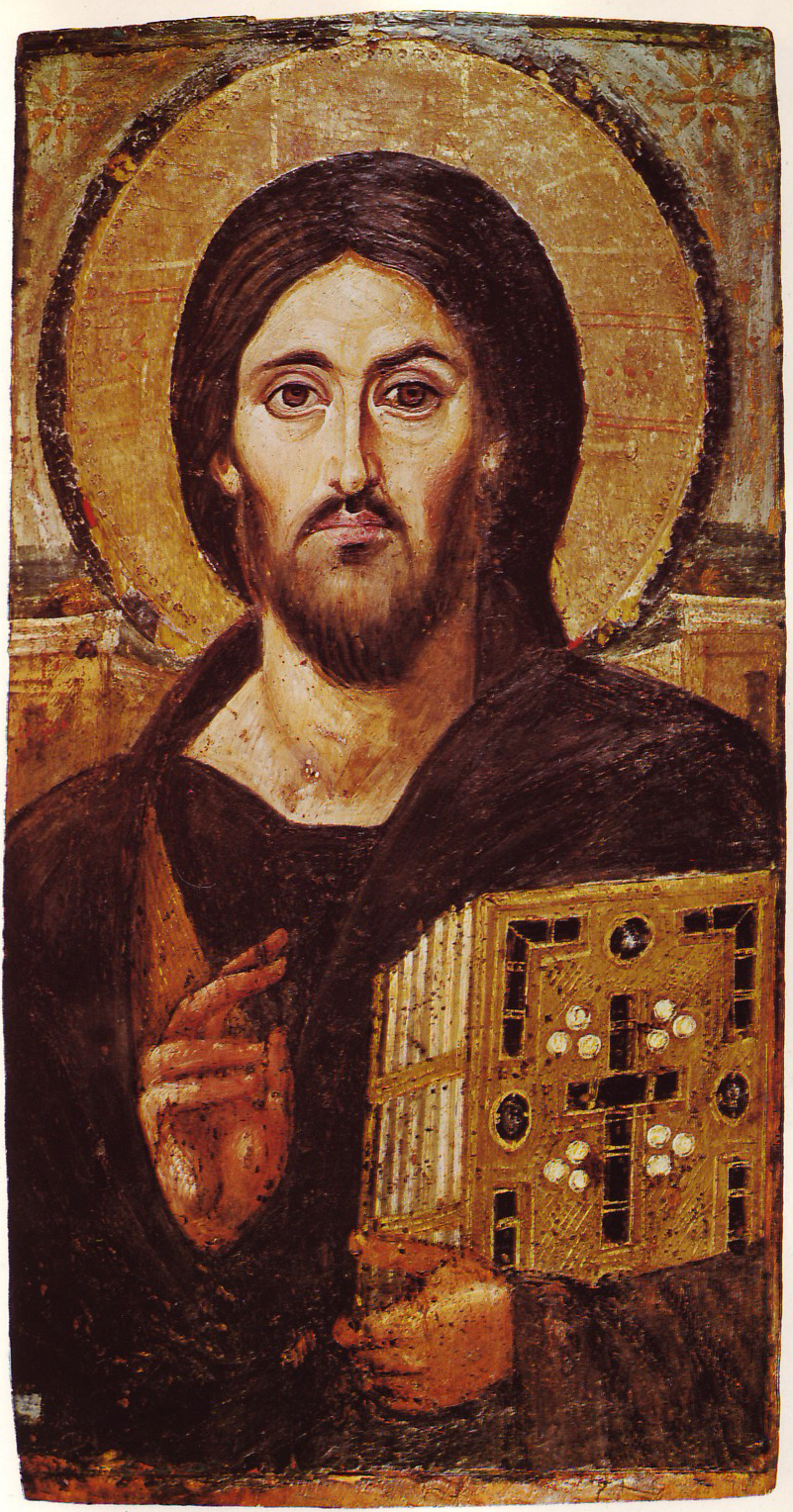
Image result for jesus icon site:wikimedia.org
Encaustic Icon of Jesus Christ, 6th century.Saint Catherine's Monastery, Sinai (Egypt)

God alone can see and judge the hearts of other men. Jesus knew what they were thinking because Jesus is God become man. Jesus saw that the scribes in their hearts were accusing Jesus of blasphemy.

Think on that. To accuse God of blasphemy. That right there is blasphemy. There really were blasphemers in Capernaum (4:13, 9:1), but Jesus was not the blasphemer, the scribes were the blasphemers.

We commit this sin ourselves if, in our hearts, we despair. We’re tempted to this despair by the things we suffer. And even more so if we think we know our own sufferings are worse or less just than those of others. Comparison to others will goad us to despair.

We suffer terrible things, it is true. Furthermore, it is true that God had and has the power to deliver us from all suffering. And it is true that, despite this, we continue to suffer.

However, it is our great hope that, in Christ Jesus and in his resurrection, we will, through suffering in Christ Jesus on his cross, enter into eternal life where there is no pain, sorrow, nor mourning. In Jesus Christ, suffering becomes the way to joy, peace, and life.

But with suffering also comes temptation. Everyone who suffers is tempted. Even Jesus is tempted. The temptation is to flee rather than embrace our cross, which is our suffering, whatever that may be in each of our personal lives – sickness, injustice, poverty.

Whatever we suffer, we do not know what others suffer. As the great spiritual says, “Nobody knows the trouble I've seen. Nobody knows but Jesus.” We know our own suffering. We see and hear of others’ suffering and we suffer with them because we love them. That’s what it means to be compassionate – to “suffer with.”

Be compassionate and do not fall into the temptation regarding the sufferings of others as less than your own sufferings. That’s another judgment we are not fit to make. It is Jesus who knows. God knows. He alone is the truly compassionate one who truly knows and embraces our passion in his passion.  

We must not try to compare ourselves with others. This comparison, because we cannot see into the hearts of others like Jesus can, only serves to increase our own suffering and diminish our compassion for others. It is utterly useless. Abandon it readily as soon as the temptation to compare appears.

God alone sees and knows everything, even everything that we hide within our hearts. The mysteries we ponder there, the sinful thoughts we think, the doubts, and the faith. He is there with us through all of that.

He is with the really real you. The you that you show no one else. The you that is stripped of all its masks. The you that you would never bring to church. As well as the you that is so self-sacrificial, loving, and noble, that, if others saw it, they would tremble in awe in your presence. But others do not see. God alone sees your heart. Remember that nothing but nothing is hidden from him.

He is with you. Now and always and forever and unto the ages of ages. He. Is. With. You.

It does not matter what I think of you. It does not matter what your fellow parishioners think of you. It does not matter what your friends and family think of you. Whether we think you're a saint or a wretch. It is God who knows your heart.

Jesus knows what we're thinking, so let us be faithful to him.


[i] Divine Names, vii

Most Popular Posts this Month

Most Popular Posts of All Time