Wednesday, August 8, 2012

5) Cursing Psalms - Who are the enemies?

go back

The Fathers of the Church allegorized the enemies cursed in the Psalms in various ways. The following is a list of some of their interpretations.

The enemy is death.
  • “But who is such an enemy unless it is death, the enemy of life.” – Eusebius of Caesarea on the enemies in Ps 9:3
The enemy is the demonic.
  • The enemy of Ps 9:6 who rules the cities is the devil. – Augustine

  • The assailants of Ps 18:40 are demons. – Evagrius 

  • “Pray the prayer of the present psalm, not against flesh and blood but against the spirits of the air who    daily harm us.... the invisible enemies.” – Arnobius the Younger on Ps 35

  • “This has reference to the devil and his followers” – Cassiodorus on the enemies in Ps 35

  • “I think this speaks about the cross on which the devil falls unknowingly.” – Evagrius of Pontus on the enemies in Ps 35:8

  • "Hatred against the demons contributes greatly to our salvation and helps our growth in holiness. But we do not of ourselves have the power to nourish this hatred into a strong plant, because the pleasure-loving spirits restrict it and encourage the soul again to indulge in its old habitual loves. But this indulgence - or rather this gangrene that is so hard to cure - the Physician of souls heals by abandoning us. For He permits us to undergo some fearful suffering night and day, and then the soul returns again to its original hatred, and learns like David to say to the Lord: 'I hate them with perfect hatred: I count them my enemies'" (Ps. 139: 22). -Evagrius, Texts on Discrimination in Respect of Passions and Thoughts 
The enemy is iniquity.
  • “Take up a love for justice and a hatred for iniquity…. It is possible at times to use hatred even praiseworthily.” - Basil the Great on hatred of enemies in Ps 139
The enemy is the self.
The enemy is sinful or filthy thoughts.
  • The teeth which God breaks in Ps 3:7 are “the teeth of sinners [which] are thoughts foreign to reason coming to us on account of our nature by which our enemies approach us.” – Evagrius of Pontus

  • “The ‘little ones’ of Babylon… are those troublesome sinful thoughts that arise in the soul.” – Origen on Ps 137

  • The “little ones” are “all corrupt and filthy thoughts against Christ.” – Ambrose on Ps 137
The enemy is temptation.
  • “While these temptations were still young, he caught hold of them and dashed them against Christ.” – Benedict on Ps 137
continue

Tuesday, August 7, 2012

4) Cursing Psalms - Allegorical Reinterpretation

Roland Murphy, as demonstrated in the last post, is willing to acknowledge the importance of understandings of these Psalms other than the historical. He writes,
Recent hermeneutical theories have challenged the dominance of [the historical-critical] method, arguing that every interpreter begins with certain inevitable presuppositions…. Certainly, the historical-critical method does not exhaust the meaning of a text, which in fact acquires new meanings as it is passed from generation to generation (8). 
Murphy’s own method of coming to a new understanding of the cursing Psalms is not altogether dissimilar from the spiritualizing and allegorical interpretations found in the patristic commentaries. When the early Christians inherited these Psalms of cursing, many felt quite free to imbue them with new meanings. Arnobius the Younger (c. 460), reading the curses of Psalm 35, asks,
What are we to do with this psalm? If we curse our enemies, we disregard the gospel, in which we are ordered not to curse them but to bless them…. Pray the prayer of the present psalm, not against flesh and blood but against the spirits of the air who daily harm us, who daily commit wars….What do you pray…? That the Lord will war and fight those who are against you as you grasp the arms of his own help against invisible enemies.
 St. Marina smiting a demon with a hammer
Arnobius’ solution to the difficulty of praying these curses as a Christian is to allegorize the cursed enemies as “spirits of the air,” that is, the demons. Allegory is one answer to the question of what use can be made of the cursing Psalms by those who believe that all of the Scripture – somehow including these passages which freely express the most vile and evil inclinations of the human heart – is inspired by God and that the Psalms are particularly suitable for use in our worship of him in accordance with ancient Christian custom. This is just the approach that Arnobius and many other early fathers of the Church have taken. They understood the enemies cursed by the Psalms to be the demons that Jesus spent so much time casting out. Augustine, Evagrius, and Cassiodorus support the view of the enemies as demons.  The ancient Israelites were clearly not intending to curse demons, but some early Christians thus redirected the curses.

Other fathers identify the cursed enemy as death, injustice, or the self. Benedict (c.480–547) understands the particularly cruel curse against the Babylonian babies as an allegory concerning temptations (Ps 137:9). He writes, “While these temptations are still young, catch hold of them and dash them against Christ.” The Scriptural type of Christ as the rock already existed and so Benedict simply spiritualized the “little ones” as temptations and made sense of the curse in that way (1 Cor 10:4; 1 Pet 2:4-7).  Origen and Ambrose also support this interpretation.

continue

Monday, August 6, 2012

3) Cursing Psalms - Scholarly Reinterpretation

go back
Dr. Jonathan Ben-Dov
Readers of the cursing Psalms sometimes have a tendency to try to explain them away, as I attempted in the last post by pointing out that the form of Psalm 137:9 was not exactly that of a curse, as if this could remove some of the horror from the image of smashing babies' heads. Some have attempted this kind of explanation for the longest and most devastating of the curses, found in Psalm 109. Ben-Dov describes how it is possible to read this curse into the mouth of the enemy rather than the Psalmist:
A simple reading of Psalm cix understands  vv. 6-19 to be the words of an individual, who is in despair as a result of his enemies' actions. However, this can also be contested, with  vv. 6-19 understood as a quotation of the prosecutors' words. This may be supported from the fact that the enemies are referred to in the plural at the opening of the psalm, while the curse refers to a single person (450).
I am uncertain whether we should critically favor the “simple reading” of this Psalm, but it causes me to wonder why some feel it necessary to seek out a more convoluted reading (then again, perhaps textual scholars enjoy that for its own sake). It seems to me that some just simply cannot stand for these passages to be in the Bible expressing sentiments they regard as so unbiblical.

Fr. Roland Murphy
Along these same lines, Roland Murphy provides a rather creative understanding of the enemies in these Psalms. Regarding the enemies, he writes in his book The Gift of the Psalms, “Are they really human beings? The descriptions are so extreme and exaggerated that they seem to portray superhuman hostile and evil powers…. Perhaps the reader of the psalms should understand the enemies as personifications of evil” (46). He has here departed from a strictly historical understanding. It seems to me that Murphy simply does not want the enemies to be human beings. He even asks, “Was the problem an evil spirit?” (47). I think he may be reaching for an explanation that the text itself does not support. I sympathize – I do not want the enemies to be human beings either – but, historically, that is what they are.

Fr. Jack Custer
No historical contextualizing, however well it alleviates certain misconceptions about these texts, can change the reality that they express hateful and destructive sentiments. Theirs is a pure and perfect hatred, however understandable or even justified it may be (Ps 139:22). As John Custer writes in his book The Old Testament: A Byzantine Perspective, “There is no reason to deny that the Psalmist probably meant exactly what he prayed for: the physical destruction of the real enemies of his nation” (167). This, in my opinion, is the accurate historical reading of the curses themselves.


continue

Sunday, August 5, 2012

2) Cursing Psalms - A Historical-Critical Interpretation

Go Back

The enemies cursed by these Psalms represent extreme examples of wickedness and injustice. The text presents this reality of injustice even at times when it is not clearly apparent in certain translations. In his article, The poor's curse,” Jonathan Ben-Dov provides some helpful textual analysis of the term  עָנִי, as used in Psalm 35:10 immediately following a curse. This term is usually translated “poor” and it appears in six cursing Psalms. For example, as if to give in part the reason for the preceding brutal curses, such as, “Let their eyes be darkened,” and, “Make their loins continually to shake,” and, “Let them be blotted out of the book of the living,” Psalm 69:29 explains “I am poor” (Ps 69:23, 28-29 KJV). On face value, such an understanding of this term might make these passages appear to be a poor person cursing the rich, as if inequity of capital were so great an injustice as to justify the hope that “ruin come upon them unawares,” but there is more implied by the term than simple poverty (Ps 35:8). Ben-Dov writes,
The root ‘nh in nominal and verbal forms does not necessarily express lack of capital. עָנִי  is a passive form of the verb ‘nh when implying oppression and the עָנִי is therefore one who has suffered oppression or injustice. Lack of property naturally accompanies this situation, but is not the major aspect of it; it is the social status, not the poverty, which leads to violence and oppression (434). 
The victim crying out for God to curse his enemies is not reacting to simple inequities or minor slights, but to actual and severe injustices. Ben-Dov further points out that the word is textually similar to an Akkadian idiom which “can indicate a person, just as it can indicate a field or any other object that has been forcefully confiscated” (434). The oppression referred to can be as severe as enslavement, such as was experienced by the Jews in the Babylonian captivity. For these reasons, I think the term is better translated “afflicted,” especially when associated with a curse, as it occasionally is in the RSV (e.g. Ps 69:29).

Babylonian Siege of Jerusalem
from 
L'Histoire du Vieux et du Nouveau Testament
by Nicolas Fontaine
Foremost among the oppressors cursed by the Psalms are the Babylonians, who consequently receive the most terrible of the curses: “Happy shall he be who takes your little ones and dashes them against the rock!” (Ps 137:9). This Psalm calls the Babylonians “captors,” “tormenters,” and “devastators” for what they have done to Jerusalem and its people (Ps 137:3, 8). The brutal devastation that they inflicted upon the Israelites involved all the atrocities of war, likely including the slaughter of children and the enslavement of the people. The psalmist is not demanding a curse upon his enemies worse than that which his enemies have already visited upon the psalmist’s people. The psalmist is invoking the law of just retribution: “life for life, eye for eye, tooth for tooth, hand for hand, foot for foot, burn for burn, wound for wound, stripe for stripe” (Exod 21:23-25; see also Lev 24:17-22). Further, it is worth keeping in mind that this most sadistic passage is not a curse in the proper sense. It does not say “O God, dash their babies against the rock!” but, “Happy shall he be” who does so, as if to say, not that the psalmist intends to carry out infanticide, but that, if someone were to do so, they would be justified, given that the Babylonians have committed equivalent atrocities.

Historically, it seems clear to me that the psalmist composed these curses, for the most part, against actual human enemies of the people of Israel. The Israelites suffered terrible atrocities. Seeing themselves as a people in relationship with God, to call upon God to curse those they would curse was, in a sense, only natural. The human reaction to severe injustice is to cry out for retribution.

Continue

Saturday, August 4, 2012

1) Cursing Psalms - Introduction


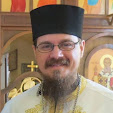
Here is an odd picture of me giving a presentation
on the Cursing Psalms
Images of violence fill the Book of Psalms – violence perpetrated both by God and by humans sanctioned by God. In the following series of posts, I will be concerned primarily with prayer for violence against one’s enemies, which is known as a curse or imprecation. Some of these passages in the Psalms, with their extreme images (for example, breaking teeth, bathing feet in blood, burying with burning coals, and breaking the heads of babies) can be quite shocking to our sensibilities, especially if we use the Psalms as a book of prayer. For this reason, the modern Roman Church has sometimes omitted these passages from its liturgical prayer. However, as a member of the Byzantine Church, which is deeply steeped in the tradition of praying the entire Psalter, this solution does not satisfy me in the least. Therefore, I will first consider these passages tomorrow from a historical-critical point of view and attempt to discover, as far as possible, the intended meaning of the text in the historical context. In the following days, I will consider how the Church Fathers and later commentators have reinterpreted and allegorized these passages and thus incorporated them into the prayer of the Church.

Continue

Friday, July 20, 2012

For the feast of St. Elias (a.k.a. Elijah)

I painted this icon of Elias for my son
a couple of years ago at St. Andrew Rublev
Iconography School in Indianapolis.
I am quite fond of St. Elias. His icon is interesting for a number of reasons. He is usually shown with a red background rather than the usual gold, which represents the fire of the Holy Spirit who spoke through him and of the fiery chariot which took him to heaven. It is also interesting because it is the only icon I have ever seen of a person who has not experienced death. 


Today is the feast of St. Elias, my son's name day, and my sister's birthday. It is a day important to me personally for a number of reasons. 


Six years ago today, my wife was in the hospital. She was pregnant with our son and she was experiencing contractions far too early. I left her side for some time to attend the Divine Liturgy at our parish for this feast day and to pray for her and our son. 


The troparion of the day, which we sang over and over again as the priest blessed our cars, reminded me that John the Baptist had come in the spirit and the power of Elias and that, just as John was the Forerunner of the Lord, so Elias was the second forerunner of the Lord. We had been planning on naming the baby after John but we had not been able to decide on a middle name. I took this as an inspiration and we named our boy John Elias. 


My beloved, still pregnant, safely left the hospital not too long after this. Ultimately, she went into labor a month early. The delivery was as difficult as the pregnancy had been. The doctors threatened an emergency caesarean. There was a great deal of blood. My wife and I prayed the Jesus Prayer together throughout much of the ordeal. As he was being born, John Elias’ head applied pressure just exactly where it was needed to prevent a placental abruption. He was safely, miraculously born. It was the only time in my life I have wept for joy. 

At this same time, my father was sick with colon cancer. We brought John Elias home to meet him. He said to the boy, “you’re coming and I’m going, but there are similarities between us.” He died shortly after. Had John Elias been born when he was due, he’d never have met his grandfather.

These mercies I attribute, in part, to the intercession of St. Elias and I ask his continued prayers for my family and yours.


This video shows the gradual development of the icon of St. Elias.


Saturday, July 7, 2012

7) The Morality of Birth Control - Commonalities

Go back

There are a few teachings about birth control consistently maintained by the fathers of the Church, the contemporary Catholic Church, and the contemporary Eastern Orthodox Church: 1) Procreation is a good and essential purpose of married life. 2) There are times for avoiding conception. 3) Abortion by any means is an immoral method of birth control. For the fathers of the Church, the only moral means of birth control is total abstinence. Current Catholic teaching would also permit periodic abstinence. The Orthodox are less clear, but, in addition to periodic abstinence and total abstinence, they would overwhelmingly also permit non-abortifacient contraception.

1) Those who would enter into Christian marriage must never do so with an attitude completely closed to having children nor indeed without the hope of having children. Without some desire for children in a marriage, there is arguably no reason to marry. Loving each other is enough, but marital love necessarily includes the desire for children.

2) Every month in the life of a marriage between the physically healthy and sufficiently young presents an opportunity for conceiving a child, if one has not already been conceived. The couple, under the guidance of the Holy Spirit and their spiritual fathers or mothers, must prayerfully and reasonably discern whether they are called to seek the fulfillment of that opportunity each time it is given. In making this determination according to the dictates of their consciences, they must seek to live in the balance between generosity and responsibility.
One recognized method of avoiding conception for
the unmarried is to wear standard issue BCGs. 

While the married should sometimes avoid conception, the unmarried should always avoid conception. The moral teaching of the Church has always required the unmarried and the celibate to practice the most effective form of birth control - complete continence.

3) No one should ever resort to an abortion regardless of the difficulty of the situation, whether they are married or unmarried, whether they are rich or poor. If a conception has taken place, the question about whether or not it was God’s will to conceive a child has already been answered. God creates no children that he does not love and want to live. It is therefore the couple’s moral responsibility, after conception has taken place, to love and provide for the newly conceived person even as Christ has first loved them.

Most Popular Posts this Month

Most Popular Posts of All Time