Showing posts with label Good. Show all posts

Sunday, January 20, 2019

No one is good but God alone.

On Luke 18:18-27

When I was a small boy, our priest told us how, when he was a small boy, the people would go to church no matter what. It didn't matter if the snow was deep or the roads were slick, the people would brave the weather and go to church because nothing was more important than the church and being there to worship the Lord.
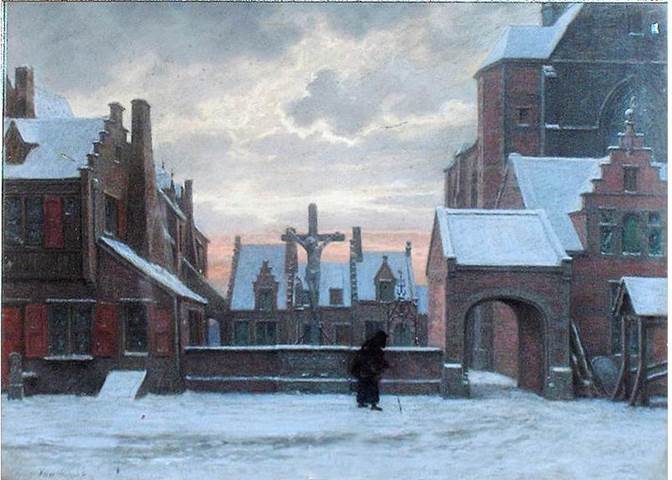

File:Vankuyck-Trudging.jpg
Trudging Through the Snow by Van Kuyck

This impressed me very much as a small boy. And so I was excited the next time there was a snow storm and I got the opportunity to test my mettle. The snow was deep and the wind was blowing yet still I trudged on to the church that Sunday morning against it all. We lived close enough to the church to walk in those days. It felt like an adventure. It was difficult but it was worth it – because it was for the Lord! However, when I got to the church, I saw that few had come. And I thought, Well! We can see who the good Catholics are!

But today Jesus tells the ruler that “No one is good but God alone” (Luke 18:19), not even the Catholics who have braved the bad weather to get to church.

All the time, I hear people say, “I’m a good person. I’ll go to heaven because I’m a good person.” Really? A little humility would help us. If we think we’re already there, we’ve got a long way to go.

If you want to enter the Church of the Nativity in Bethlehem to venerate the place where Jesus was born, they tell me you must enter through what they call the “Door of Humility.” It’s so low that you have to bow to enter. This is a good symbol of the fact that there is no access to the birth of Christ in our hearts without humility. Jesus himself is the model of humility - the very God entering into this world as a little baby.

And now here is Jesus who (I don’t care how good you may be, you’re not as good as he is, and) when somebody calls him, “Good teacher,” he retorts, “Why do you call me good? No one is good but God alone.” In other words, if you’re calling him good, you’re calling him God. That’s the answer to his question, “Why do you call me good?” Because he is the Lord God – that’s why.

All this talk of goodness and who is good is important to the ruler’s question, “What shall I do to inherit eternal life?” Because there is only one way to life – to be united to the one who is good and is life.

But the ruler seems to think the way to life is by doing something. He asks Jesus, “What shall I do to inherit eternal life?” This is also what people usually have in mind when they audaciously say, “I’m a good person.” What they mean is, “I haven’t killed anybody.”  

There are things we must do, of course, and Jesus lists them. We must keep the commandments. And, when we do not from time to time, let us repent in the holy mystery of repentance. Spending a lifetime away from confession is surefire way into hell, I can tell you, and a destroyer of humility.

But even before Jesus lists the commandments, he says that “no one is good but God alone.” This reveals to us that perhaps goodness may be less about doing and more about being.
The Lord is good. Goodness is his name.  As the psalm says, "Praise the Lord, for the Lord is good, sing praises to his name for it is beautiful.” (Psalm 134.3).

God is not good simply because he chooses or wills to align himself with some abstract standards or principles of goodness or morality. God is goodness himself and the source of all goodness. He is good himself just as he is love himself. He is good in his being, his essence, his nature. Good is a name for who he is.

As with all the names of God, this name is only an analogy. The essence of God is beyond us, beyond being, beyond all names, and beyond knowing. If someone claims to fully understand the mystery of God in himself, be assured that they are insane.

Yet, paradoxically, we can know God somehow, can't we? We do have these names for God, given to us by God himself – good and light and beautiful and love and ecstasy and zeal (The Divine Names, Pseudo-Dionysius). Jesus himself calls God good as did the inspired psalmist before him.

We know that God is good by our own experience of goodness.

The ruler in today's gospel lacks perfection, but even he is able to see that Jesus is good and can teach him the way to life. However, he needs Jesus to teach him that God is the only good one and the source of all goodness.

Perfect goodness cannot be attained by simply following the rules – though following God’s commandments by the grace of God is essential. Rather we are good to the extent that we participate in the goodness of God and we live to the extent that we live the life of God.
All the things that God has created are good. God, who is good, is the ground of all being – so everyone who is and has being partakes of his goodness. 

One of my professors, Father Jonathan Tobias, writes, "We know God's goodness because goodness, too, is part of our created nature. We are 'analogous' to God: He is infinitely beyond us, and He is Creator while we are creature. But still, his design for goodness in us resonates with his transcendent goodness."

What good can we do in response to this goodness of God? How can we not do as the psalm says and "sing praises to his name?" That is why we gather here to celebrate liturgy together day after day and week after week – not just to puff ourselves up or to keep out of hell – but to sing praises to his name.

When asked what we are supposed to get out of liturgy, Father Robert Taft, of blessed memory, replied, "What you get out of the liturgy is the privilege of glorifying almighty God. If you think it's about you, stay at home. It's not about you. It is for you, but it's not about you.... John says quite clearly that Jesus is the important one: ‘He must increase, I must decrease.’ He must increase, I must decrease. Everybody needs to hear that. It's not about me, it's not about you. It's about something infinitely more important than us."

My dear brothers and sisters in Jesus Christ, we are not God. You are not God and I am not God. Jesus says that God alone is good. Let us stop, then, acting like we can make ourselves good by our own power. Give up! Surrender! Let us turn to God instead, who alone can make us good.

We can do nothing apart from the grace of God. Jesus shows the ruler that the beginning of the way to eternal life is to keep the commandments. But even this we cannot do apart from the grace of God.

The ruler had kept these commandments – Jesus does not deny it. So God must have been with him all along. Let me tell you, God is with us all. To the extent that we exist at all, and certainly to the extent that we are good, God is in us. We are all at all times and in all places in God's hands.

Left in our hands, our salvation would be impossible, but with God all things are possible (Luke 18:27; Matt 19:26). Of myself, I cannot do anything. God can do anything. Through God, with God, and in God, I can do anything (cf. Phil 4:13). Apart from God, without God, outside of God, I can do nothing.

We are weak, but he is strong.
We are powerless. Only God is powerful.
We are overrun with many inadequacies, weaknesses, addictions, resentments, and sins. Things and people lord over us, replace God in our hearts, become idols. These things – whatever they are for us personally – can become obstacles between us and the only good one. They can disrupt our prayer of praise to the source of all goodness.

We ought to bask always in the light of his goodness, the way that a sunflower follows the sun.

One of the images of the Good that my favorite theologian, Pseudo-Dionysius, offers us is the sun. He writes, "The great, shining, ever-lighting sun is the apparent image of the divine goodness, a distant echo of the Good. It illuminates whatever is capable of receiving its light and yet it never loses the utter fullness of its light."

If we would strive for the perfection he calls us to – asking the Lord, "what do we still lack?" – we must remove every obstacle that exists between us and God – even if they are good things – like the riches of the ruler. If we have many riches burdening our hearts, let us give them away. If we're over-focused on other good things or people, let us renew our focus on the Lord.


More than by our own moral striving, we will grow in likeness to the Lord by basking in the light of his glory and praising his name without ceasing. All goodness comes from him. He is the only one who is good. 

Sunday, May 6, 2018

The Mystery of Good and Evil

Why do we suffer? Why do bad things happen to good people? Why is it that babies sometimes die before they get a chance to live? Why is it that sometimes they are born blind, like the man in today's Gospel?


Healing of the man born blind
Codex Egberti, Fol 50

Theologians know that God does not make death – that no evil comes from God – that God is the author of every good and only good. In other words, theologians know that God is not to blame for our suffering or for death or for blindness.

Whence come these things into the world, then? Well, the wages of sin is death, they also say with St. Paul (Rom 6:23). So, it would seem that sin, which is missing the mark, is the origin of every injustice – every instance of a good person suffering evil maybe rightly blamed on sin – either on their own sin or on someone else's sin. It's clear that it's not always our own sin that causes us to suffer, though it often is. But if someone persecutes or abuses you, you suffer even though you have done nothing wrong. Everything that Jesus suffers is like this. Jesus is altogether sinless. Yet, he suffers greatly from the sins of others who persecute him and mock him and torture him and crucify him. When we suffer at the hands of others, we do well to remember that Jesus has identified with us in that – and has taught us how to respond to it – with forgiveness.

Nonetheless, people usually do not respond that way to the injustices they suffer. Most people, when they get hurt, lash out and hurt others – often the ones they hurt aren't even people that did them any harm. Sometimes, for example, a boss will humiliate someone at work and, too fearful and cowardly to respond like a Christian to the one who has wronged him – with courage and honesty – and without animosity or resentment, instead they swallow the humiliation and shame and anger and resentment and bring that home to their spouse and their kids – snapping at them and humiliating them, though they're totally innocent and only want love and kindness.

Sometimes, we're not even good at revenge. Revenge is a bad thing but taking it out on the innocent is even worse. Yet many times this is what we do.

In this way, our sin sends out ripples of harm into the world. That's clear. When one person gets hurt, it often leads to them hurting others. Hurt people hurt people. It's not a justification, by the way. There is no justification for us to hurt each other – to be nasty to one another, or unforgiving, or judgmental. It's not a justification, it's just an observation. This can all be easily observed in our own lives.

Partly extrapolating from these experiences, many theologians have concluded that all suffering results from sin. I have often counted myself as one who agrees with them. There are the obvious ways in which this is the case, such as the examples I have described, but there are also hidden ways in which our sins hurt other people and ourselves.

We are spirits as well as bodies and so our sins have spiritual ramifications in the spiritual world as well as physical ramifications in the physical world. Sin is a break with our true created nature, which is both spiritual and material. We cannot even begin to imagine how much suffering each of our sins, voluntary and involuntary, brings into the world – into the whole cosmos. With our sin, which is unnatural, we disrupt the whole created order of nature.

So if we understand that sin is the cause of all human suffering, the disciples' question to Jesus about the man blind since birth seems to be a reasonable one: "Who sinned, this man or his parents, that he was born blind?" (John 9:2). You see, they understood that blindness results from sin. That's true.  It's true of both physical blindness and spiritual blindness. 

And they understood that we suffer from one another's sins as well as from our own. In Exodus, the Lord says he will visit “the iniquity of the fathers upon the children” (Ex 20:5; 34:7). So they suggested that it might be the sins of his parents rather than his own sins that resulted in his blindness. Again, it’s not unreasonable, especially if we understand that this man's parents include not only his mother and his father but even all his ancestors back to his first parents Adam and Eve. Surely the world is broken and sometimes people are born blind into this broken world because of sin.

We might also add the sins of demons to our consideration. Their sins too – and not only the sins of us humans – yield great suffering in the cosmos. They too are at war with God and with their own created nature.

In any case, despite all of this, Jesus once again confounds conventional theology. He says, "It was not that this man sinned, or his parents, but that the works of God might be made manifest in him" (John 9:3). Jesus later says the same thing about the illness of Lazarus, saying that “it is for God’s glory so that God’s Son may be glorified through it” (John 11:4).

I am left gasping at this explanation which confounds all my reason. I can dance around it with cleverness and point out that Jesus does not altogether deny the role of sin in the origin of blindness. He only says that it wasn't the sins of this man or his parents. One could argue that perhaps the sins of others or the sins of demons are to blame. But Jesus doesn't blame any sin at all in his etiology of the blindness. My reason wants to chirp, “If sin is not to blame, then what? If no sinner is at fault, then who? God?” I cannot blame God for this man's blindness. But Jesus says that he is blind so that the works of God might be made manifest in him.

I understand very well that Jesus heals him – and that this is a work of God that reveals the divinity of Jesus. I understand very well that the Lord uses the man's blindness to teach the world to see. This is what the Lord does again and again. Out of the darkness, he brings light – as on the first day of creation. He says, “Let there be light.” And there is light. I see that, out of death, the Lord brings life. By death, he tramples death. And so, how fitting that through the blindness of one man, he gives many the eyes of faith. The man whose eyes are opened testifies to the healing and that Jesus is of God, and he believes and worships Jesus (9:11, 25, 30-33, 38).

The Lord brings good out of evil. That's what the Lord does. But he is the origin of no evil. So today, when he says that the man is blind so that God can heal him, I don't understand. That's a mystery to me. It's rather like the mystery of the cross.

I want to ask Jesus after he gives his explanation, "Yeah, but, had it not been for sin in the world, surely this man would not have been born blind?" But that's not the kind of question we're going to hear from Jesus or his disciples. That's the kind of speculative theology they don't get into. Maybe that kind of thinking is more Greek than Hebrew – or maybe it's more a curse of this age than that to be vexed by such questions. You won't hear them saying things like, "Well, if reality were other than it is, what then would this or that be?" That's not their shtick – not at all. Jesus is much more interested in healing this man than in theoretically analyzing his condition.

We ought to be like Jesus in this. Simply love, show compassion, heal, deliver, all to the glory of God, rather than trying to subject everything to our finite analytical human understanding, as if reality, or even God, were subject to us. If instead, we seek to glorify God, then God blesses us beyond all understanding.

The mystery of good and evil is beyond our comprehension. And there comes a time to accept that we cannot understand everything and that every answer we can give is a lie. Perhaps we can understand best in silent contemplation of the awesome mystery when we stop trying to figure everything out and abandon ourselves completely to God. 

Wednesday, March 21, 2018

See the Good

Joseph sees the good in the midst of evil. Do we? Or, do we complain constantly about every little thing we suffer without ever stopping to give thanks and praise to God for the good with which we are also blessed?

Joseph sending his brothers back to Jacob with food
illustration from Byzantine bible
Topkapi Palace Museum

This is not to diminish our sufferings. Our sufferings are real and sometimes unjust and it's worthwhile to complain about them from time to time. We see this with Abraham – and the Psalms are full of complaint. But it's not okay to neglect the other part of it. We must give thanks to the Lord at all times even in the midst of our complaints. If we complain to God about every evil, we must also remember to thank him for every good.

Sometimes, we even blame God for our suffering. Things don't go our way and we say to God, "I can't believe this is how you treat your friends," as if he was the one who visited evils upon us. Or, we look at all the evils in the world – the cruelty visited upon the innocent by war, murder, rape, abuse, and neglect; by poverty and ignorance; by natural disasters, earthquakes, fires, floods, and diseases – and we conclude that no good God could let this happen. By this reasoning, atheists and enemies of God conclude that either there is no God or that God is not good. One important thing to remember is that God is not the author of any of these evils. God did not make death (Wis 1:13). It is our sin that brings all these things into the world. It is my sin. We are to blame, and not God, for every evil.

Even so, we might object, "Doesn't God have the power to prevent these evil consequences of our sin?" Yes, he does. He brings good out of every evil he permits, but he isn't beholden to any evil. God is all-powerful and can do anything by any means. So, I don't have all the answers here. I'm not sure there are answers fully comprehensible to our merely human understanding. Yet God alone gives a peace which surpasses all understanding (Phil 4:7). And this is the only kind of peace that there is.

Yet, somehow, many of those who blame God for every evil neglect to credit him for every good. We experience a great deal of good in our lives and in creation. I dare say it is very good (Gen 1:31). If it weren't, the evil destruction of things that goes on would not be so very evil, which it is. There is great good, for which God deserves all the credit. We must strive to see this good.

If you cannot see the good, it's not because it isn't there, but simply because you lack the eyes to see – the eyes of faith. If a creature lives in a cave underground all its life and never emerges into the light – and there are these creatures – then it cannot see the sun. 

Nonetheless, the sun is there, and the sun is good, and the sun is necessary to that very creature's life. In the same way, there is good, even if we can't always see it. It is there and it sustains us in being. If you cannot see it now, it doesn't mean that you will never see it again. Have hope and pray for the gift of faith. The Lord loves you and in his own time and by his own means, he will answer that prayer and give you that gift.

Joseph sees the good. The Lord has clearly given him the gift of faith, I think, and he was not a man unfamiliar with suffering and evil. He experienced a great deal more of it than most – not all – but most of us. He says to his brothers, "I am your brother, Joseph, whom you sold into Egypt" (Gen 45:4). This betrayal by his own brothers (37:18-36) was only the beginning of his sufferings. He would later be falsely accused of trying to seduce his master's wife and thrown into prison (39:12-20). Some of us know the sting of false accusation. When you do, remember that you are in the good company of Joseph and draw inspiration from his example.

Despite suffering all of this as a result of their crime, Joseph says to his brothers, "And now do not be distressed or angry with yourselves because you sold me here; for God sent me before you to preserve life” (45:5). Do not be angry with yourselves?! That’s what Joseph is concerned about at this point: his brothers’ feelings? He isn’t angry at his brothers who betrayed him and enslaved him. He doesn’t even want them to be angry at themselves! How can this be? If he was angry, I would not fault him. Would you? Yet, he sees the good so clearly, that the evil he has suffered drowns in the good.

You see, the whole land was afflicted with famine, and would be for another five years. Through Joseph’s interpretation of dreams, God had revealed this to Pharaoh, and so Egypt had prepared for the famine. And this now enables Joseph to provide food for his family throughout the famine and preserve their lives. So, he concludes that it was not his brothers who sent him to Egypt, but God (45:8). This is a stunning faith and ability to see the good.

Though he lived long before Christ, Joseph not only fulfills what Christ commands us – that is, “love your enemies and pray for those who persecute you” – he even surpasses this command (Matt 5:44). He not only loves those who tried to do away with him, he even tries to convince them that they have not sinned against him, but that it was the work of God.*

Like Joseph, let us not focus so much on recovering our ease and comfort when we find ourselves in trouble and distress that we forget to always seek and offer thanks to the Lord for everything that is good.†


* Paraphrased from St. John Chrysostom’s Homily 64 on Genesis.
† Ibid. 

Most Popular Posts this Month

Most Popular Posts of All Time